
Code Name: Denise
“A long rattling road from Alexandria to Antibes. Through mountain and forest and choking smoke. But here I am at last…”
We’ve been getting Travelling At Night ready for its closed beta and ensuing public demo this summer. That’s meant smallish things like zhuzhing the Steam page, tweaking Spencer’s animations, and adding contextual cursors – the last of which immediately makes it feel like a real CRPG! (And clears up whether you’re clicking on a door, trying to walk Spencer ill-advisedly through a wall, or about to converse with Chez Felix’s tom-cat, Pompon.) We’ve also been working on some larger stuff, so here’s a selection starting with AK’s writing and design.

Antibes has been a ghost town for months – we were focused on the Sanitarium and on later cities. But it’s the first part of the game, and the first part people will see when they play the demo later this year! So I’ve been going back now and unmuting all the Antibes citizens who had placeholder lines. And rewriting the intro dialogue for the seventh or eight time, because those are actually the first in-game words that people will see.
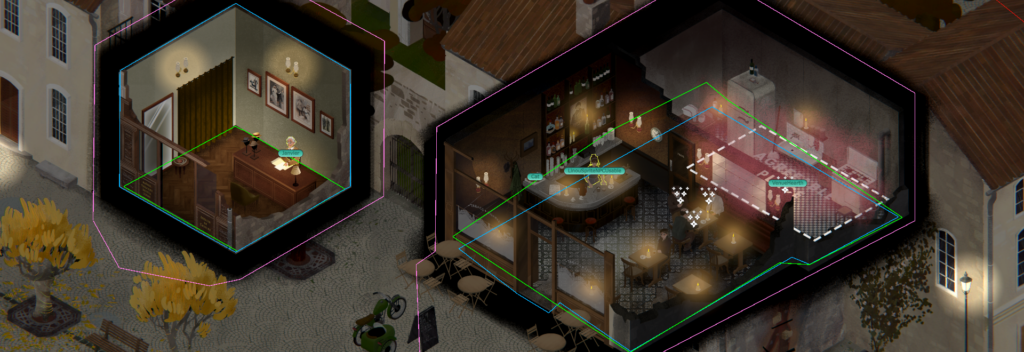
LONG RATTLING ROAD? Lottie’s talked before about the non-diegetic inspiration that we’ve taken from Dogville:

These imaginary chalk zones have been really useful for another tiny RPG conundrum. Sometimes you want to stop the player in the middle of the road and do a dialogue: ‘I’m exhausted. Should I (a) fall over (b) grit my teeth (c) complain’. But if this happens with no warning, it’s jarring. Sometimes you can have an NPC run up to them at double speed and trigger a conversation (‘The Prince-Bishop insists you attend him at the Palace!’). Sometimes you can add something that indicates there’s a conversation queued, for the player to begin at their convenience.
But sometimes you want it to run as an interrupt. We tried tweening the camera nicely, adding some ceremony, but it still felt like an imposition. If you’re running across the map to get to a merchant, it can be annoying when the game stops you to talk about coffee. But once we signal that the interrupt is coming, it feels immediately more courteous, less intrusive.
Depressingly difficult to find actual coffee in the immediate post-WW2 years, by the way. But I was delighted to learn that a German slang term for coffee substitutes (barley, chicory, acorns) was Muckefuck, and a French one was jus de chausette.
Now the bookshop. Andrée is one of those nice little spontaneous collabs between artist and writer. I didn’t have any strong opinions about who we should have running the bookshop. So Lottie modelled her loosely on Andrée Borrel and Adrienne Monnier. Her backstory, and story purpose, blossomed naturally from those. I like her a great deal now, but I subsequently began to insist on French first names that lack accents. The Alt + Numpad combos on my keyboard are getting too much business.
A few things to unpack in this conversation. Besides the fact that I need to look at the portraits display logic again – the portraits need to stick around longer, still.
-
- That’s Spencer passing a Sophistication skill check. We are very explicit that it’s the least useful skill in the game… but it’s not useless.
- The option to bum a cig off Andrée is one of those tiny consequences we mentioned in the last conversation. Spencer doesn’t really smoke any more. That’s a little unusual for an urbane gentleman in 1948, but he carried Worms as passengers for a good while, and Worms dislike smoke.
- That cheeky cig does actually also refresh both a Forge and a Grail pip in your Aspect Pool, but I’d forgotten to add it to the dialogue node when I made the video. Informed Secret Histories players can probably guess what pips are refreshed by a nice Viennese coffee.
- Noir is one of the notes we like to hit, and here is Spencer channelling Bogart or Ronet, at least until he starts coughing. As Lottie’s said before, he’s an attractive gent, but not a hypermasculine one.
- ‘Poets!’ Until very recently I had no idea how fabulous Apollinaire was, even through the murky lens of imperfect translation and my pitifully limited French. So I’d like to apologise to our English-speaking audience for the constant upcoming drizzle of Apollinaire quotations, and to our French-speaking audience for the often freely phrased translations. (Our Polish-speaking audience can revel in the fact that Guillaume Apollinaire was born Wilhelm Albert Włodzimierz Apolinary Kostrowicki.)
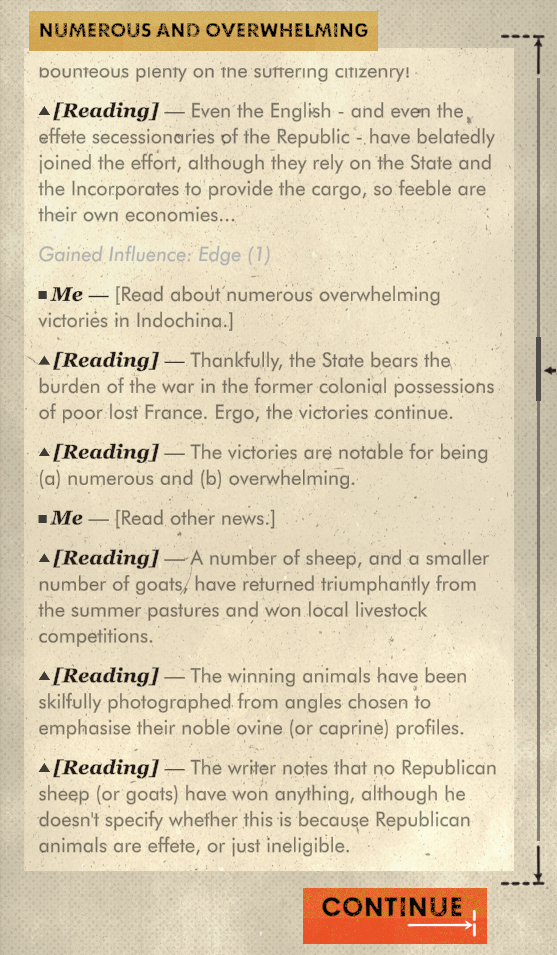
One last snippet. Andrée also sells newspapers. In this history, in the south, the Vichy newspapers were never shut down.
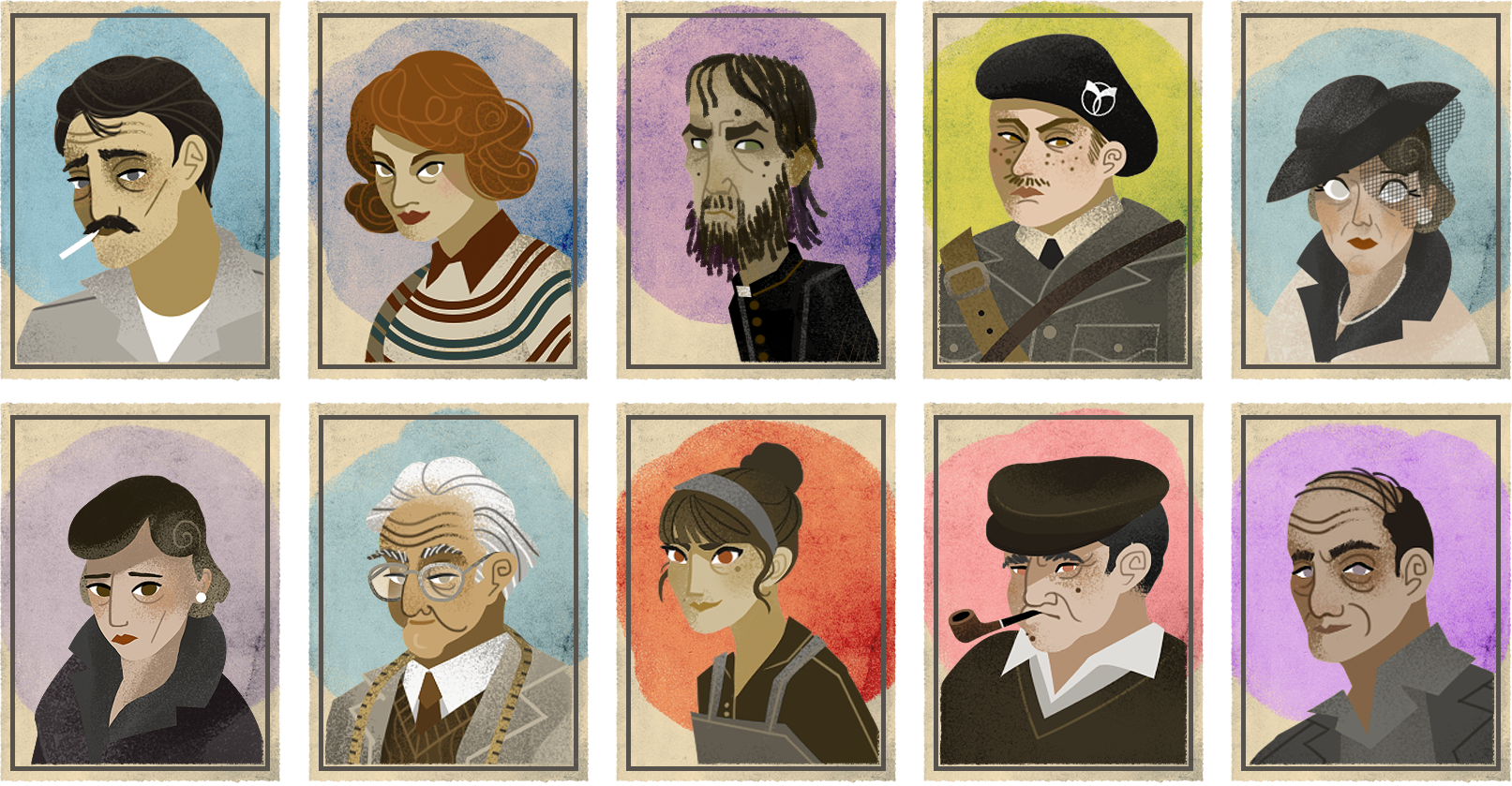
In art world, I’ve been populating Antibes. You can talk to all of the characters below, from Monsier Janvier the left-handed tailor to Léon the young, zelous Milice francais, all the way through to Madame Zelia’s long-running feud with Philomèle. One of these characters is looking for their husband. Another is a smuggler. A third has a seemingly unlimited number of sons. ALL THESE AND MORE AWAIT IN ANTIBES.
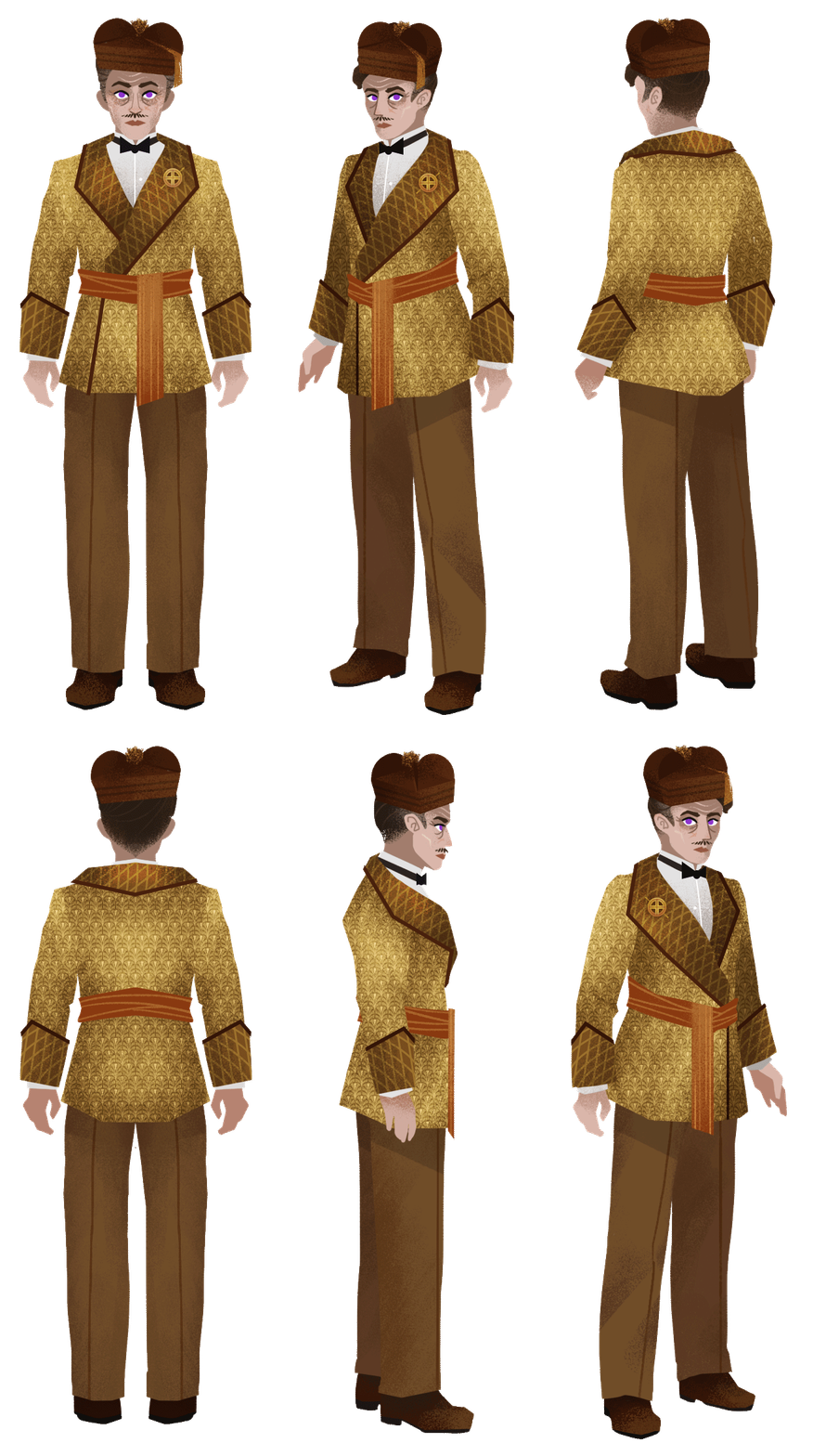
We’ve also reached an important art milestone recently: all of Spencer’s 18 (!) outfits are now designed! Feast on this handsome spectacle:
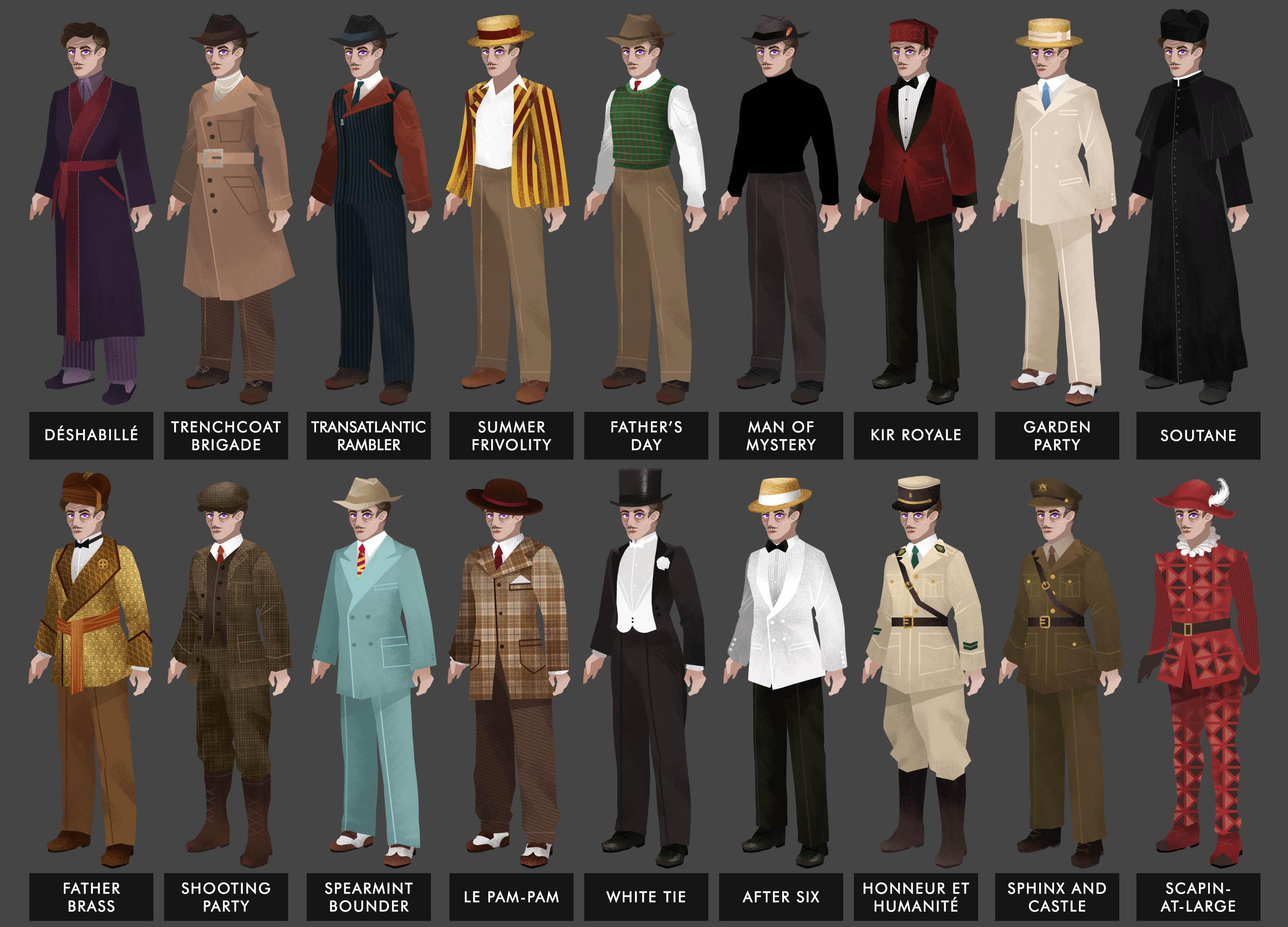
These are not final and I may tweak them – but we’ve really tried to give period-appropriate, roleplay-relevant but consistently different outfits for you to collect throughout the game. Each outfit provides different skill bonuses, climate-relevant benefits and effects on those around you. So I wouldn’t suggest running around Berlin dressed in ‘Summer Frivolity’, or trying to smooth-talk Frauke while wearing ‘Scapin-at-Large’. All our art in Travelling At Night is 2D, so the next step is to draw all eight angles of each outfit so Spencer can run in whichever direction you tell him to (and so we can make GIFs like these):
This is the one major downside of making an entirely 2D CRPG. Animations take a lot of work from start to finish, and they’re rigid: if AK wanted Spencer at a different angle, I’d have to draw 18 new assets, cut them up, and get someone more qualified to create a bespoke animation. 3D art is intimidating because of the specialist knowledge required and the heavy set-up work, but I think once that’s complete it’s a pretty flexible pipeline for creating whatever you need from your base set of assets. There are some silver linings, though. For example, we animate eyes by cutting holes in people’s faces and placing movable eyeballs and pupils behind. That in itself is quite fun. We animate blinks by switching quickly between three different versions of characters’ eyelids:
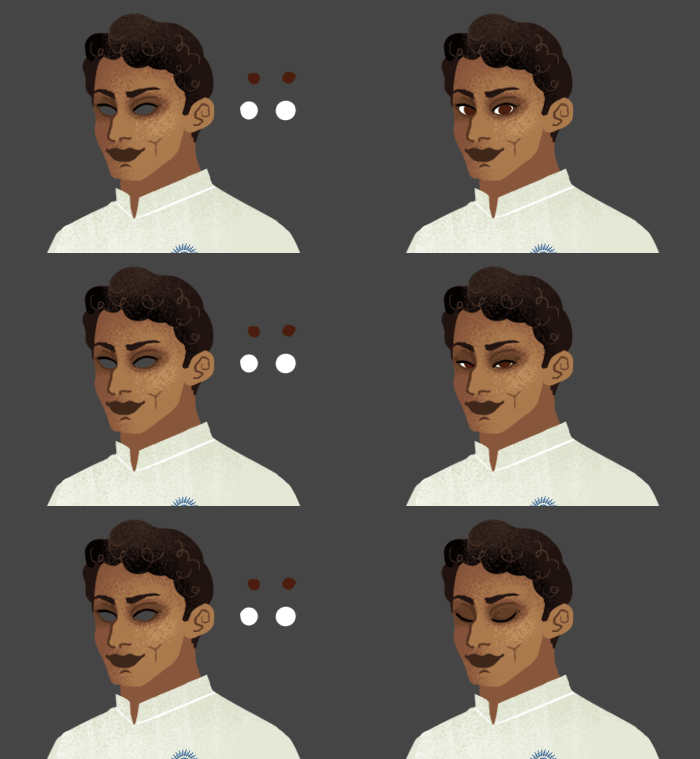
This is quick to do and works great, but it does mean I spend quite a lot of time opening up Photoshop files and feeling like these characters have discovered some dark raunchy secret about me:
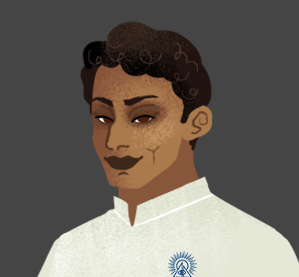
How does Vincent KNOW
Perhaps he knows that behind the scenes, game dev is a precariously balanced set of cocktail sticks that make a butterfly when you look from just the right angle. Or perhaps he knows that our testing content is, um, not entirely serious all of the time. Well, I guess now you do too. TIL NEXT TIME.

